

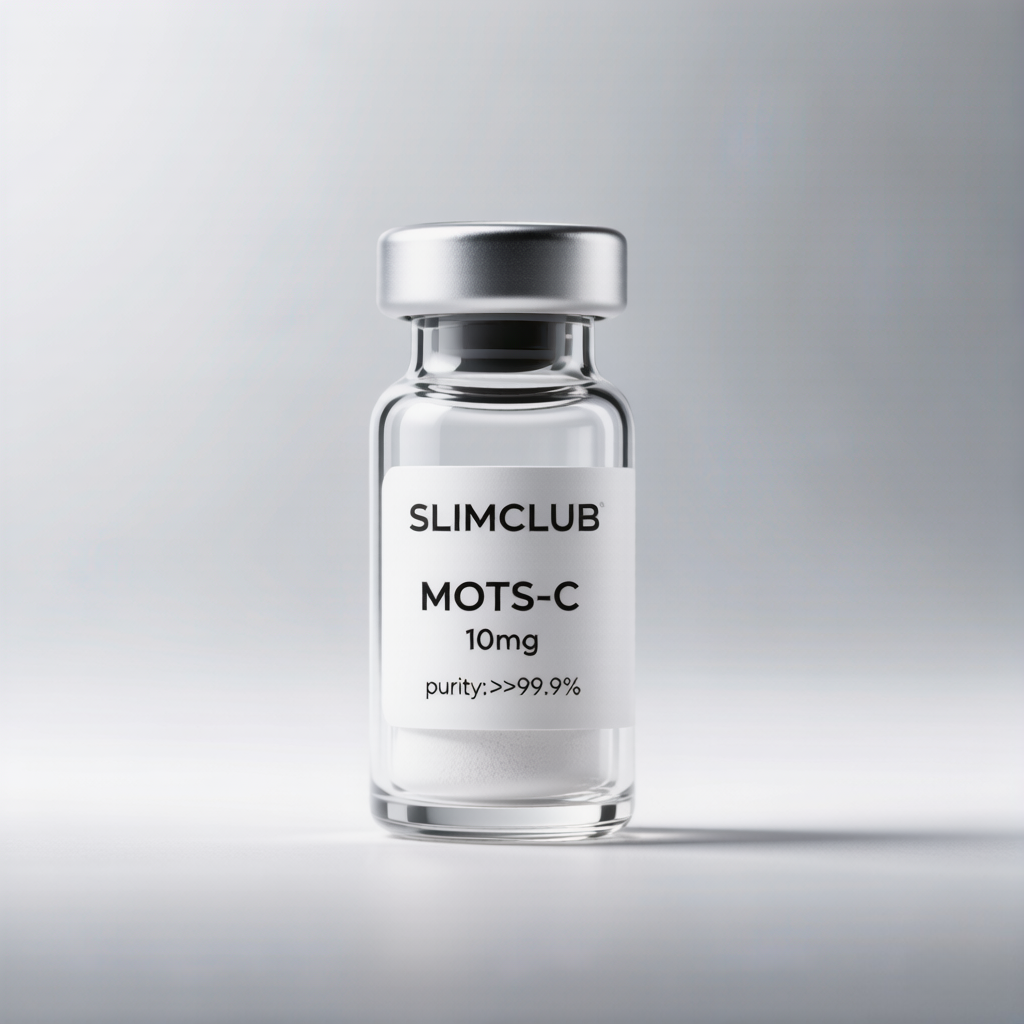
MOTS-c (Mitochondrial Open Reading Frame of the 12S rRNA-c) Lyophilized Peptide
-
Detail
1. Composition
Active ingredient: MOTS-c peptide (acetate salt).2. Appearance
White to off-white lyophilized powder or cake. After reconstitution: clear, colorless solution.3. Available Strengths (Research Vials)
-
10 mg/vial
-
20 mg/vial
-
40 mg/vial
4. Molecular Information
-
Sequence: MRWQEMGYIFYPRKLR (16 amino acids)
-
Molecular Formula: C₉₁H₁₃₈N₂₆O₂₂S (theoretical)
-
Molecular Weight: ~2,060 g/mol
-
Purity (research grade): ≥95% (typically >98% by HPLC)
5. Mechanism of Action
MOTS-c functions as a cellular stress response signal:-
Enters the nucleus and binds to the AHR (aryl hydrocarbon receptor) pathway
-
Increases intracellular AMP/ATP ratio, activating AMPK
-
Enhances insulin sensitivity and glucose uptake in skeletal muscle
-
Promotes browning of white adipose tissue (increases UCP-1 expression)
-
Attenuates age-dependent physical decline and metabolic dysfunction
-
Improves exercise capacity and mitochondrial function
6. Research Indications (Not Clinical)
Current research focuses on:-
Metabolic syndrome and type 2 diabetes
-
Age-related metabolic decline
-
Insulin resistance
-
Obesity and thermogenesis
-
Skeletal muscle function and physical performance
-
Longevity and mitochondrial health
Not approved for:
-
Human treatment of any disease
-
Weight loss in healthy individuals
-
Performance enhancement in sports
7. Reconstitution
Solvent: Sterile water for injection or bacteriostatic water (recommended for multi-use)Procedure:
-
Add calculated volume to vial (e.g., 1 mL into 5 mg → 5 mg/mL)
-
Swirl gently – do not shake violently (peptide is sensitive to aggregation)
-
Allow to dissolve completely before use – solution should be clear
Note: MOTS-c is relatively stable but avoid repeated vortexing or foaming.
8. Dosing Reference (Research Use Only – Animal Models)
Species Route Frequency Dose Range Mouse Intraperitoneal (IP) 5–14 days 5–10 mg/kg/day Mouse Subcutaneous (SC) 5–14 days 5–10 mg/kg/day In vitro Cell culture N/A 1–50 µM Human research equivalent (estimated for reference – NOT clinical recommendation):
Some exploratory studies have used ~10–20 mg subcutaneously, 2–3 times per week. No established human dose exists.9. Storage
Condition Temperature Duration Lyophilized powder (long term) -20°C 24 months Lyophilized powder (short term) 2–8°C 3–6 months Reconstituted solution (bacteriostatic water) 2–8°C 7–14 days Reconstituted solution (sterile water) 2–8°C 24–48 hours Protect from light. Do not freeze reconstituted solution.
10. Reported Research Effects (Selected Studies)
Effect Model Reference Finding Insulin sensitivity Aged mice Restored insulin sensitivity comparable to young mice Glucose homeostasis Diet-induced obese mice Reduced fasting glucose and improved glucose tolerance Browning of WAT Obese mice Increased UCP-1 expression and thermogenesis Exercise capacity Young mice Improved running endurance Myoblast differentiation C2C12 cells Enhanced differentiation and glucose uptake Longevity Mouse model Attenuated age-associated metabolic decline 11. Adverse Reactions / Toxicity Profile (Research Data)
-
Well-tolerated in animal studies at therapeutic doses
-
No observed cytotoxicity in cell studies at relevant concentrations
-
High doses in animal models (e.g., 50 mg/kg) may cause mild injection site reactions
-
Long-term safety data are limited
12. Contraindications
-
Known hypersensitivity to MOTS-c or any excipient
-
Active malignancy (metabolic pathways involved in cancer progression – caution advised)
-
Pregnancy or breastfeeding (no safety data)
-
Severe renal or hepatic impairment (no research data)
13. Warnings and Precautions
-
For research use only – not FDA or EMA approved
-
Not for human therapeutic use or self-administration
-
Limited human safety data available
-
May interact with metabolic pathways; use caution in diabetes research subjects
-
Not for athletic performance enhancement – peptide hormones are generally prohibited by WADA
-
Discontinue if any unexpected adverse reaction occurs
-
-
Customer ReviewsNo comments